Extreme Weather
Extreme Weather in Belize
Facing the Storm: Extreme Weather in Belize
Belize may be known for its beautiful beaches and lush rainforests, but it’s also a country that faces some serious weather challenges. Located right in the path of the Atlantic hurricane belt, Belize regularly experiences extreme weather events that have shaped both its environment and the lives of its people.
One of the biggest threats Belize faces is hurricanes. These powerful storms usually hit between June and November, often bringing heavy rain, strong winds, and dangerous storm surges. Hurricanes lik Hattie in 1961 and Iris in 2001caused major destruction damaging homes, wiping out crops, and displacing thousands. Even when the storms don’t make direct landfall, they can still lead to severe flooding in rural and low-lying areas.
Aside from hurricanes, Belize also deals with droughts during the dry season, which can hurt farming and water supplies. And with climate change, these events are becoming more intense and unpredictable. Rising sea levels and warmer oceans are leading to stronger storms and more flooding, making climate resilience a top priority for Belize. The country is actively working on ways to prepare for future disasters but the road ahead won’t be easy.
How is Belize preparing for these storms?
- Seeking Shelter: The country has designated evacuation routes and hurricane shelters, especially in coastal areas that are most vulnerable to storm surges and flooding. These shelters are stocked with emergency supplies and are designed to withstand high winds and rain.
- Building and structure: After Hurricane Hattie destroyed much of Belize City in 1961, the government made changes like relocating the capital inland to Belmopan. Since then, Belize has worked to strengthen building codes, especially in coastal and flood-prone areas. There's also ongoing work in coastal zone management, including mangrove protection and coral reef conservation, which help reduce the impact of storm surges.
- Education: Belize has implemented school education systems and drills to help students prepare for disasters.
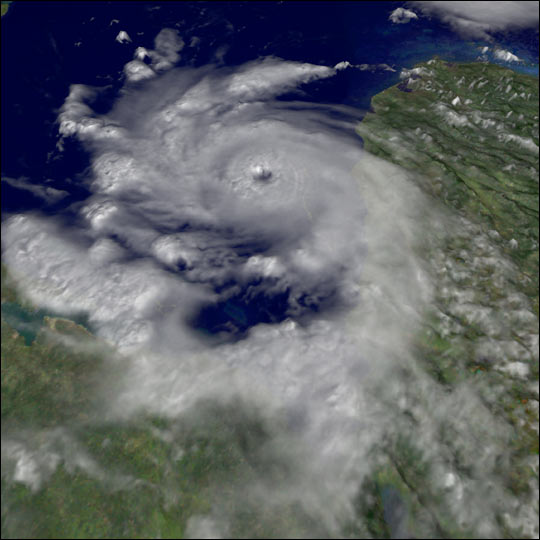
Picture of Hurricane Iris 2001
(The above image is a combination of visible and thermal infrared data (for clouds) acquired by a NOAA Geostationary Operational Environmental Satellite (GOES-8) on October 8, 2001, at 2:45 p.m.)
Cyclone H
Cite:
https://earthobservatory.nasa.gov/images/1827/hurricane-iris-hits-belize


I really enjoyed reading your blog about extreme weather in Belize—it was informative and well-structured. You did a great job highlighting the serious impact hurricanes and other weather events have on the country, especially how events like Hurricane Hattie and Iris changed Belize’s approach to disaster preparedness. I liked how you explained the different strategies Belize is using to build resilience, like stronger building codes, coastal protection, and education. It’s clear you did your research, and the picture of Hurricane Iris was a powerful visual that helped reinforce your points. The blog flowed well, and your use of subheadings made it easy to follow. Great work overall!
ReplyDelete